

A tired brain isn't only about thinking too much. It may need the right nutrients, too
Your brain works hard every day. But have you asked whether it's getting enough nutrients?
Sound familiar? You wake up to a screen full of work, sit in meetings all day, and have to think, decide and deal with one thing after another, until you feel worn out, can't focus, or run out of energy before the day is over.
Many people put this down to hard work or not enough sleep, and those really do matter. But there's something else that often gets overlooked: the nutrients the brain and nervous system need to work.
Your brain uses energy all the time, even when you're sitting still
Brain cells need energy to send nerve signals and to control the body's many functions, and several nutrients play important roles in these processes, especially the B vitamins.
- Vitamins B1, B2, B3 and B5 take part in breaking down nutrients so the body can use them for energy
- Vitamin B6 is a coenzyme involved in making neurotransmitters such as serotonin and dopamine
- Vitamins B9 (folate) and B12 play a role in metabolic processes the nervous system needs to work
- Choline is a precursor of acetylcholine, a neurotransmitter involved in memory and learning
- Zinc is a mineral that plays a role in the normal function of cells and the nervous system
These nutrients don't act like stimulants. Instead, they are involved in the basic biochemical processes that help the body and brain work normally.
Research spotlight: how are B vitamins and minerals linked to stress?
Kennedy and colleagues (2010) studied 215 healthy working men aged 30 to 55, who were randomly assigned to take either a B-complex product with vitamin C and minerals or a placebo for 33 days.
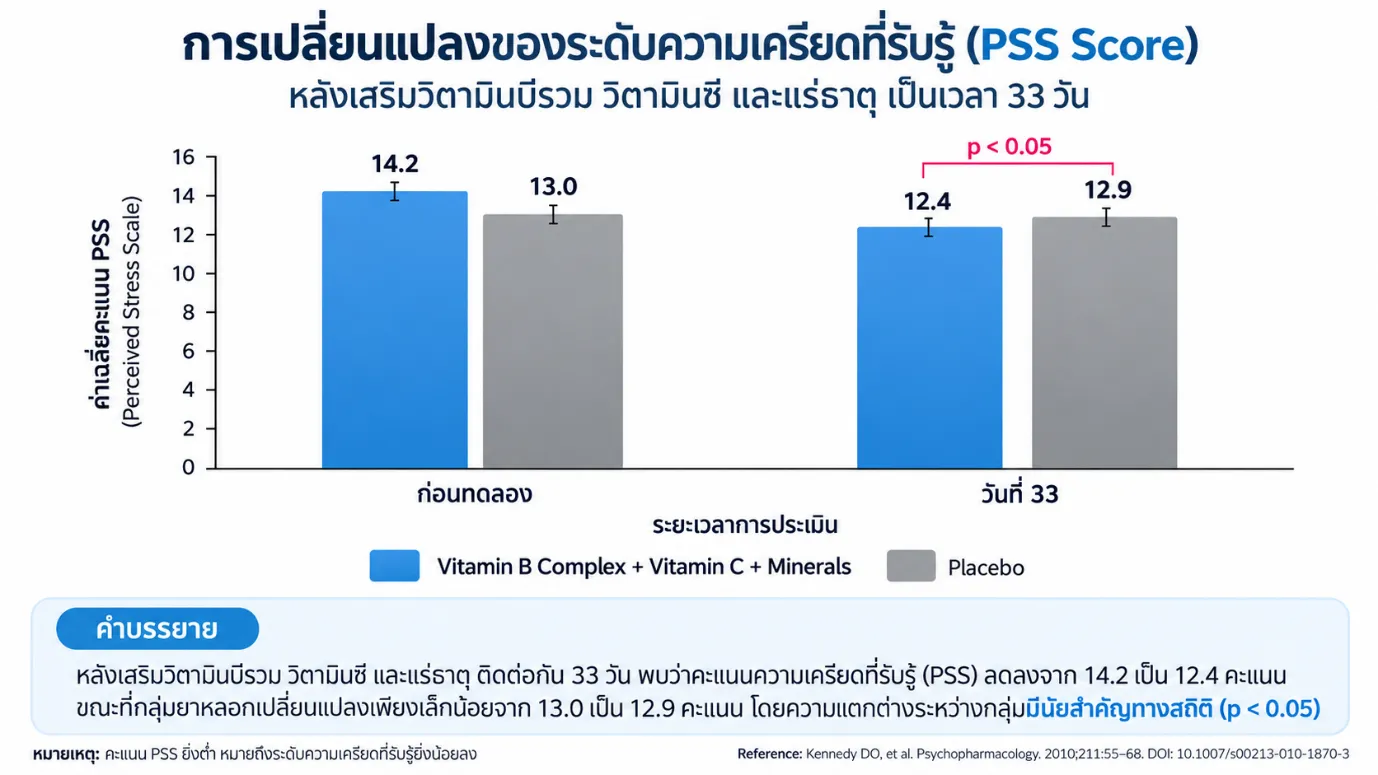
Reference: Kennedy et al., Psychopharmacology, 2010;211:55–68.
After 33 days of B-complex vitamins, vitamin C and minerals, perceived stress scores (PSS) fell from 14.2 to 12.4. After adjusting for covariates, the difference compared with the placebo group was statistically significant (p < 0.05).
Note: a lower PSS score means a lower level of perceived stress.
Caring for your brain starts with everyday basics
Getting enough rest, exercising, managing stress and eating a varied diet remain the foundations of brain health.
At the same time, getting the right amounts of several B vitamins, along with nutrients such as choline, zinc and other essential minerals, is another way to support the normal function of the nervous system and the body's energy processes.
Caring for your brain isn't only about thinking less. It's also about making sure your nutrition is ready for every day.
- Kennedy, D. O., Veasey, R., Watson, A., Dodd, F., Jones, E., Maggini, S., & Haskell, C. F. (2010). Effects of high-dose B vitamin complex with vitamin C and minerals on subjective mood and performance in healthy males. Psychopharmacology, 211(1), 55–68. ↗
- Tardy, A.-L., Pouteau, E., Marquez, D., Yilmaz, C., & Scholey, A. (2020). Vitamins and minerals for energy, fatigue and cognition: A narrative review of the biochemical and clinical evidence. Nutrients, 12(1), 228. ↗
- Institute of Medicine. (1998). Dietary reference intakes for thiamin, riboflavin, niacin, vitamin B6, folate, vitamin B12, pantothenic acid, biotin, and choline. National Academies Press. ↗

We use cookies to improve performance and give you a better experience on this website. If you accept, we can show you content that better matches your interests. You can change your consent at any time via “Cookie settings”. Cookie policy